Conversations about pay amongst colleagues or management can be an often-uncomfortable topic or even seen as off-limits, and it doesn’t have to be.
In the second of our blog series covering pay gaps, in the lead-up to the IDN Pay Gap Conference on Thursday 12th February, we will cover pay transparency, why it’s important, and share guidance for both employees and leaders about approaching these conversations and advocating for fair pay.
What is Pay Transparency?
Pay transparency refers to the open disclosure of salary ranges, pay grades and structures, and compensation policies by employers to job applicants and employees.
While there is no current “Pay Transparency” law in the UK, ‘equal pay for equal work’ is a protected right under the Equality Act 2010, organisations with 250+ employees must report annually on gender pay gap data and pay secrecy clauses are unenforceable. The EU Pay Transparency Directive goes further, with some measures ensuring:
- Remuneration details are disclosed before initial job interviews
- Employees can request pay information for colleagues doing the same or equal value work
- A ban on employers asking about pay history during recruitment
- Heavier, more consistent penalties for employer violations of the Directive
Why is it important?
Implementing more pay transparency via policies and processes can play a vital role in ensuring a fairer workplace, facilitating:
- Increased trust between management and employees
- Reduced inequality by highlighting inconsistencies
- Improved employee engagement and retention
- Increased confidence in organisational process
- Increased accountability and transparency on what needs to change
For Employees – Approaching Fair Pay Conversations
Do your research – understand as much as you can about your organisation’s pay structure, typical paths of career progression at the company. Also, look up typical salaries for your role – there are several salary benchmarking tools online. Ensure you are also clear on the responsibilities you have in your role, too.
Ask for a meeting – instead of raising the subject unexpectedly, arrange a meeting with your manager and make it clear that it is to discuss your role and your salary.
Gather your evidence – Record any instances where you’ve made an impact or you have received positive feedback on any work you have done. Having an evidence base will work in your favour in making a case for a salary increase.
Focus on finding clarity – seeking solid information with questions/statements such as “I would welcome clarity on how pay decisions are made” or “How is career progression determined here?” or “What steps do I need to take to step up to X role?” shows that you’re serious about retaining your role but being firm on seeking tangible progression.
For Managers – Facilitating Fair Pay Conversations
Be prepared – familiarise yourself with policies and processes relating to career and pay progression in your organisation. Seek clarification from HR if you’re unclear on any of these. During the meeting, be clear on what you do – and don’t – know, and follow up on any gaps in knowledge after the meeting.
Ensure a safe space to share – Employees should be able to ask questions and share their perspectives without negative consequences. You can create psychological safety by listening without defensiveness, avoiding critical or dismissive language and by acknowledging your employee’s concerns, even when solutions aren’t immediate or obvious at the time of the meeting.
How Organisations can Enable Pay Transparency
Individual employee and manager confidence in such conversations only goes so far if there is lack of clarity at the organisational level.
Implementing the following measures will help:
- Ensure pay grades are included in all job advertisements
- Publish pay bands and career progression information to all employees
- Ensure pay/career policies – and adherence to such policies – are made clear and consistent
- Encourage, rather than shut down, discussions about pay, and ensure concerns are heard with appropriate action taken
- Train managers/leaders on inclusion, bias, and pay literacy
Develop Confidence and Clarity at IDN’s Pay Gap Conference
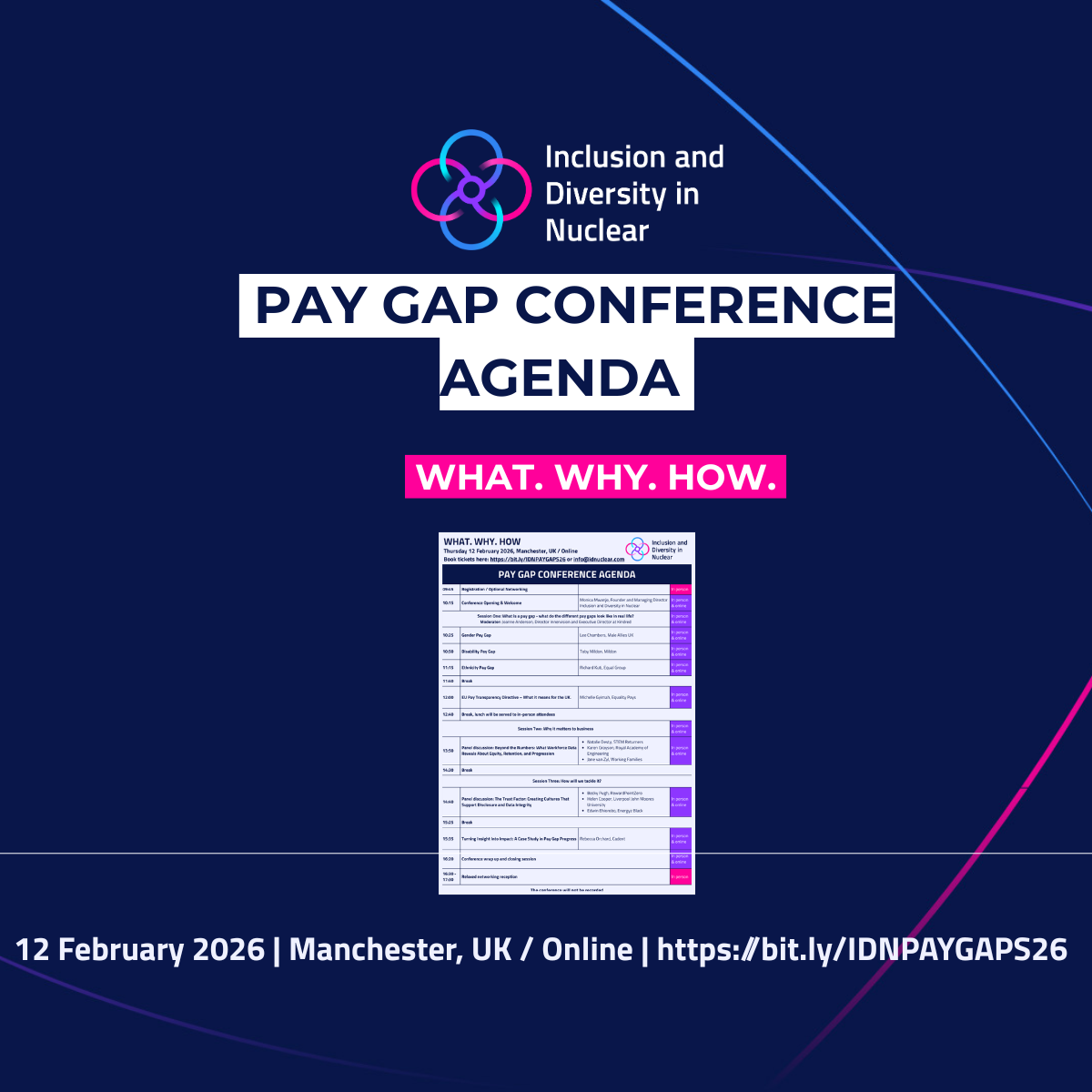
Professionals and leaders from the nuclear industry and beyond will gather on Thursday 12th February 2026 in Manchester and online, to learn practical strategies to reform pay practices and drive meaningful, measurable change in their organisations.
Part of the conference is dedicated how we as an industry tackle the pay gaps that occur, by creating the conditions and best practice to close these gaps.
For more information and to register, click here.